
In today's rapidly advancing field of medical technology, minimally invasive surgery has become deeply ingrained in modern healthcare. Imagine a doctor guiding an endoscope or other instruments precisely to a lesion through natural orifices like the mouth or urethra. This remarkable feat relies on a suite of sophisticated "tools." Among them lies a seemingly inconspicuous yet vital component—the guidewire endoscopic spring. It acts as both an "intelligent guide cane" and "flexible armor" for surgical instruments, navigating the complex labyrinth of the human body to illuminate the path for life-saving procedures.
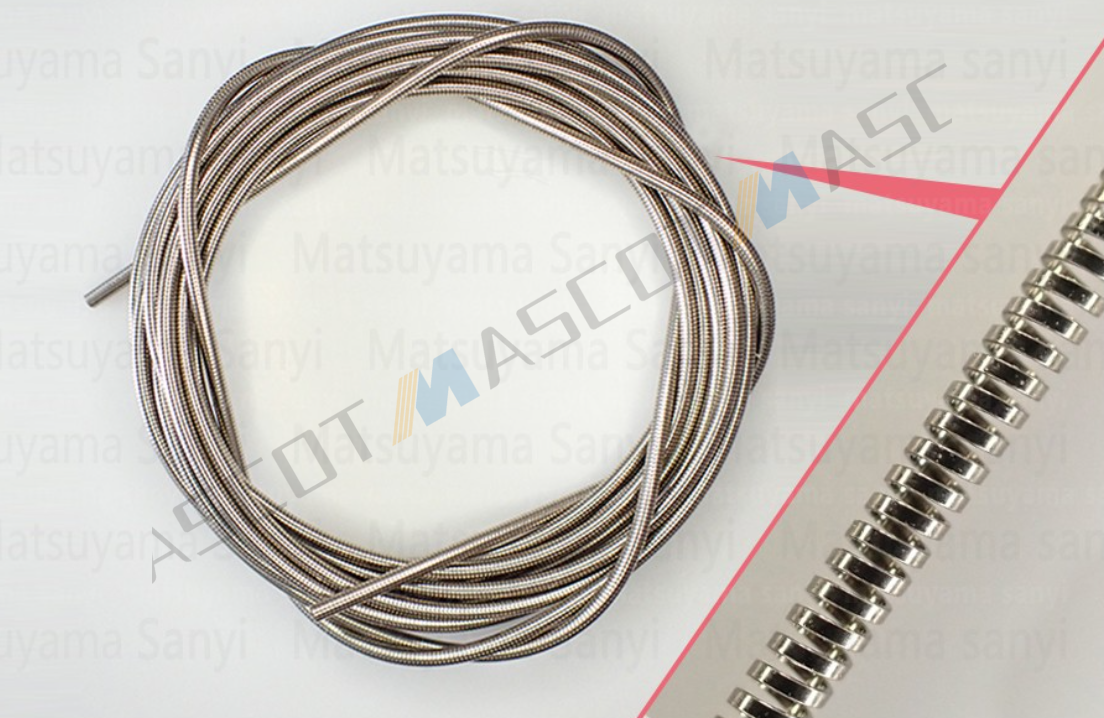
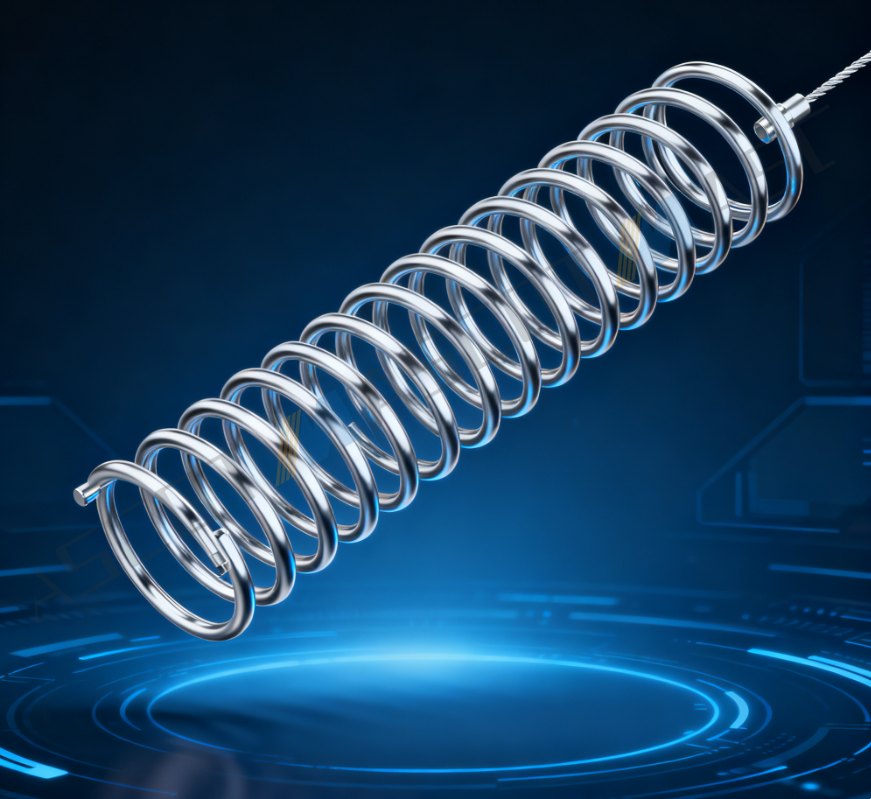
What is it? The Body's "Micro Threader"
Simply put, a guidewire endoscopic spring is an extremely precise micro helical spring, typically sheathing the outermost layer of a guidewire. Its core mission can be summarized in two words: flexibility and support.
Flexibility allows it to conform to the winding paths of organs like the ureter or bile duct, slithering around sharp bends like a serpent without injuring delicate tissues.
Support enables it to establish a sturdy, patent "tunnel" for the endoscope or therapeutic instruments that follow, preventing them from collapsing or kinking at curves.
Inner Workings: The Elaborate "Sandwich" Structure
The design of this tiny spring embodies profound materials science and engineering wisdom, often featuring a three-layer composite design:
Inner Core (The Backbone): Typically made of medical-grade stainless steel or nitinol wire precision-wound into a helix. Its design is ingenious: the front end is more flexible (finer wire, larger pitch) for exploration and navigation, while the rear section is more rigid (thicker wire, tighter pitch) to provide robust radial support, ensuring the lumen remains open.
Middle Layer (The Enhancer): Some high-end products incorporate a flat wire spring. Think of it as squashing a round wire flat. This maximizes the internal diameter without increasing the outer diameter, enhancing instrument passage efficiency.
Outer Skin (The Slick Coat): The spring surface is coated with ultra-slippery materials like PTFE or hydrophilic polymers (e.g., PVP). This "coat" becomes exceptionally lubricious when wet, reducing the friction coefficient to extremely low levels, enabling "silky-smooth" insertion and minimizing mucosal damage.
Mascot's Guidewire Endoscopic Spring is an exemplary practitioner of this "sandwich" structure philosophy. It doesn't just replicate the theoretical layered design; it delivers profound optimizations at every level. Mascot pushes the boundaries of manufacturing, achieving ultra-fine spring forming with a minimum wire diameter of Φ0.01mm (about 1/3 of a human hair) and precise control over a minimum outer diameter of Φ0.1mm, providing core support for high-end medical devices.