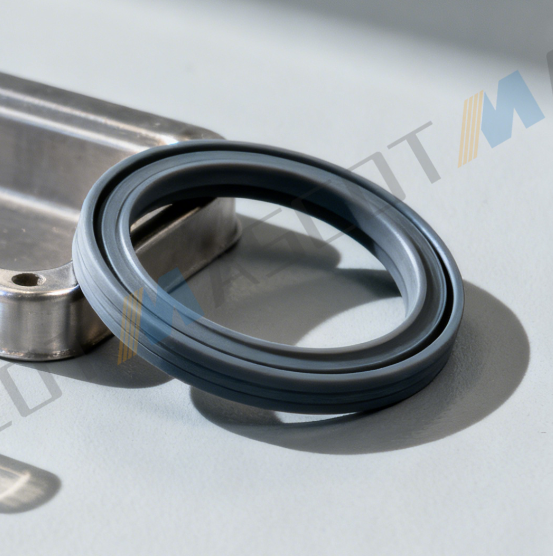
Pre-installation preparation is fundamental. First, check whether the model and dimensions of the spring-energized seal match the installation conditions, ensuring the seal is free from damage, deformation, or contamination. Simultaneously, clean the installation groove and the mating surfaces of related components to remove burrs, oil stains, metal chips, and other impurities. Use anhydrous ethanol or a dedicated cleaning agent if necessary, and ensure surfaces are completely dry before installation. Furthermore, prepare dedicated installation tools, such as expansion tools and guide sleeves, and avoid using sharp tools like screwdrivers that directly contact the seal.
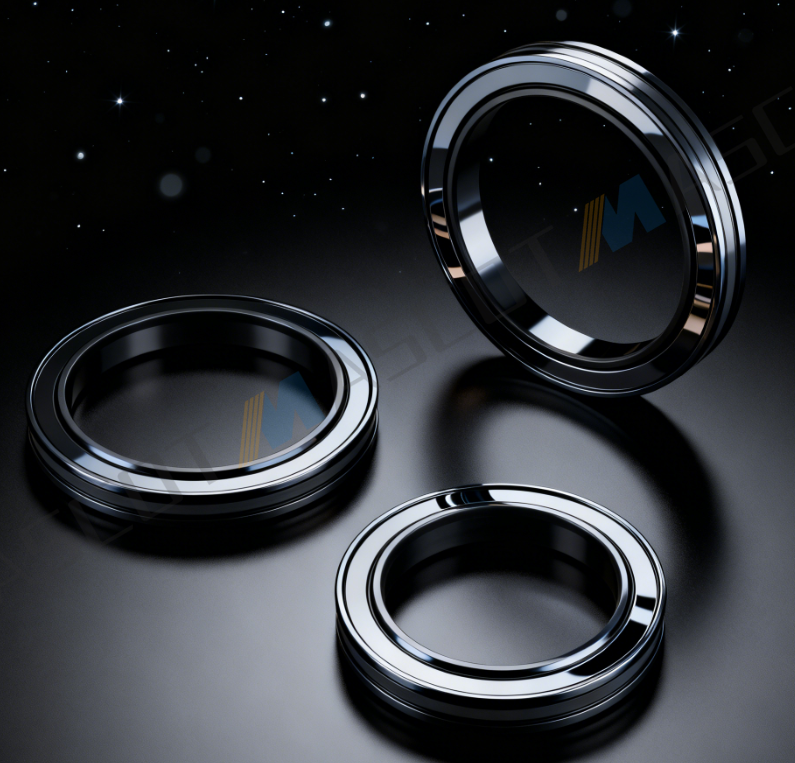
The core installation method must adhere to the principles of "Stability, Precision, and Non-damage". For rod seals, first apply compatible lubricant to the rod surface and the sealing lip. Slide the seal onto the guide sleeve and slowly push it into the installation groove, ensuring the sealing lip faces the medium side. For piston/bore seals, after similarly applying lubricant, use an expansion tool to moderately expand the seal and embed it evenly into the installation groove with uniform force, avoiding excessive unilateral stretching. During installation, keep the seal level and press it into place gradually, ensuring tight contact with the installation groove without twisting or tilting.
Practical techniques can enhance installation efficiency and quality. First, the selection of lubricant must be compatible with the working medium to avoid chemical reactions that affect sealing performance. Second, for smaller-sized spring-energized seals, soaking them in lubricant briefly can reduce friction resistance during installation. Third, if there are minor burrs on the edges of the installation groove, gently polish them smooth with fine sandpaper to prevent scratching the sealing lip. Additionally, during multi-person collaborative installation, ensure synchronized actions to avoid damaging the seal due to excessive localized force.
Post-installation precautions cannot be overlooked. First, check if the seal is correctly installed by gently pushing it to confirm there is no looseness or displacement. Second, perform a no-load test run before starting the equipment to observe whether there is leakage or abnormal heating at the sealing area. Finally, record the installation parameters and operating conditions for subsequent maintenance and replacement. Special attention must be paid to avoiding pulling or twisting the spring-energized seal during installation, and avoiding immediate exposure to extreme pressure or temperature after installation, ensuring the seal gradually adapts to the working environment.
In summary, the installation of spring-energized seals requires attention to both standardization and detail control. By thorough preliminary preparation, adherence to scientific methods, application of practical techniques, and emphasis on subsequent inspection, their sealing performance can be fully utilized, and the equipment's service life can be extended. To learn more about sealing tips, feel free to consult Mascot Technology. You are welcome to call 400-008-3858!