
Compression springs are elastic components widely used in mechanical, automotive, electronic, and other fields. Their manufacturing process directly determines the spring's mechanical performance, durability, and reliability. This article will systematically elaborate on the main manufacturing流程 of compression springs and discuss the impact of key process steps on their durability.
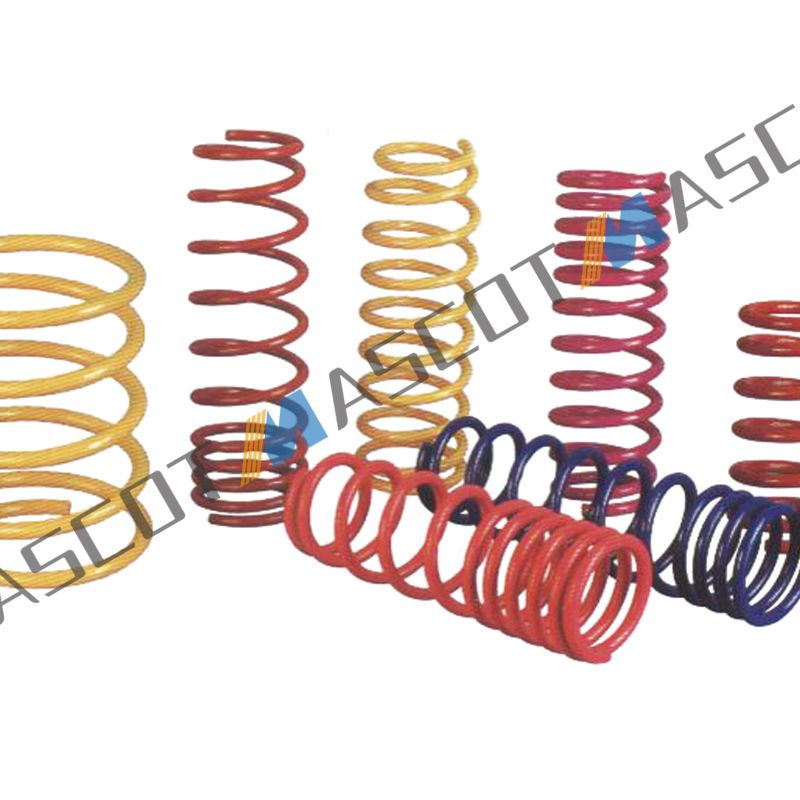
I. Main Manufacturing Process of Compression Springs
The manufacturing of compression springs is a multi-step systematic工程, primarily including the following steps:
1. Material Selection
Material is the foundation of spring performance. Common materials include high-carbon steel (e.g., SWC), alloy steel (e.g., 60Si2Mn), stainless steel (e.g., 304, 316), and special alloys (e.g., Inconel). Material selection requires comprehensive consideration of strength, toughness, corrosion resistance, and fatigue characteristics.
2. Wire Preparation
The wire must undergo pre-treatment such as drawing and annealing to ensure uniform diameter, a smooth surface, and preliminary relief of internal stress, creating conditions for subsequent forming.
3. Coiling and Forming
Coiling is the core of spring forming, divided into cold coiling and hot coiling:
Cold Coiling Process: Suitable for springs with smaller wire diameters (generally ≤8mm). Formed by a coiling machine at room temperature, it offers high efficiency and lower cost but may leave residual forming stress.
Hot Coiling Process: Mostly used for larger wire diameters or high-strength materials. The wire is heated to the recrystallization temperature (approximately 800°C) before coiling, resulting in low internal stress after forming, but it requires higher equipment and energy consumption.
4. End Treatment
The ends usually need to be ground flat (e.g., closed and ground) to ensure a flat spring end surface and uniform force distribution, avoiding stress concentration caused by uneven ends.
5. Heat Treatment
Heat treatment is crucial for regulating spring performance:
Quenching + Tempering: Significantly improves hardness and elastic limit, suitable for high-load working environments.
Stress Relief Annealing: Primarily used to eliminate residual stress generated during cold coiling, helping to improve fatigue life.
6. Surface Treatment
Shot Peening: Impacts the surface with high-speed shot to form a beneficial compressive stress layer, which can greatly enhance the fatigue strength of the spring.
Electroplating/Coating: Such as zinc plating, phosphating, or Dacromet treatment, mainly serves to enhance corrosion resistance and extend service life in harsh environments.
7. Inspection and Testing
Finally, the spring undergoes a series of inspections including dimensional verification, load testing, and fatigue testing to ensure it meets design and usage requirements.
The exceptional durability of Mascot compression springs stems from precise control over the entire process from material to finished product. We not only use high-quality raw materials and advanced coiling processes but also ensure each spring achieves optimal stress state and anti-fatigue performance through precise heat treatment and unique surface enhancement technologies. Choosing Mascot means you receive not just a component, but a guarantee of long-lasting reliability. If you need to customize high-performance spring solutions for your project, please feel free to contact us at 400-008-3858. Our technical team will provide you with professional support.