
Disc springs, named for their resemblance to a bottomless metal plate, are referred to as disc springs for short and are also known as Belleville washers. They consist of four key parameters: outer diameter (D), inner diameter (d), thickness (t), and height (Ho). They are elastic components capable of withstanding axial loads, typically processed from metal strips, steel, or forgings.
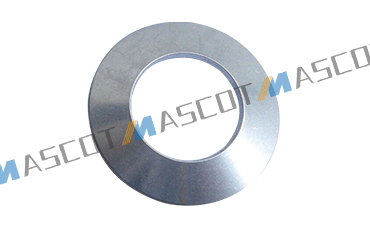
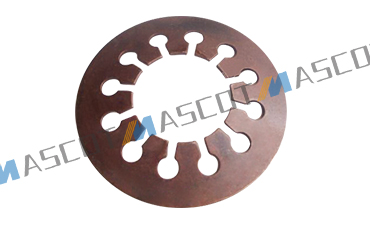
This practical elastic component was invented by the Frenchman J. Belleville in 1866. Initially, it was mainly used as a washer and patented in the United States and France, hence also known as Belleville Springs. In China, research on disc springs began in the 1970s, and enterprises started production in the 1980s. With the advancement of reform and opening-up and the introduction of imported equipment, the application of disc springs has become increasingly widespread.
Working Principle of Disc Springs
Disc springs are conical annular discs that bear axial loads. Generally, the thickness of the disc is constant, and the load is evenly distributed on the inner edge of the upper surface and the outer edge of the lower surface. They are usually made of spring steel and can not only bear static loads but also cope with impact loads or dynamic alternating loads, meeting strict requirements for fatigue life and load loss.
Basic Types and Advantages of Disc Springs
Disc springs are divided into two types: those without a bearing surface and those with a bearing surface. Among them, disc springs with a bearing surface have rounded edges, which significantly reduce tension loss caused by friction during rebound in the working process. They can be used individually or combined into disc spring sets through opposite combination, overlapping combination, or composite combination, and are suitable for heavy machinery or molds with small installation space and requiring large loads.
Nowadays, engineers in advanced countries such as Europe, America, and Japan have widely applied disc springs in mechanical components. Compared with traditional coil springs, they have advantages in safety performance and can make up for the shortcomings of traditional coil springs, such as limited use space and load, and excessive compression stroke, effectively improving mechanical performance. Disc springs with a bearing surface can provide a larger compression space for a single piece, and the spring quality is lighter. On the basis of saving materials, they can achieve the same load as disc springs without a bearing surface at 75% of the same displacement. This is because the bearing surface moves the force - bearing point inward, shortening the lever arm. Under the same torque, the load increases, compensating for the load loss due to reduced thickness. In addition, disc springs with a bearing surface are easier to stack when used in combination and are not prone to misalignment. The size of the bearing surface is generally 1/150 of the outer diameter.
Quality and Strength of Mascot Disc Springs
Mascot specializes in the production of various disc spring - related products, including standard and non - standard shock - absorbing disc springs, anti - loose disc spring washers, coil springs, disc washers, disc springs, diaphragm springs, slotted disc springs, V - shaped disc springs, spring washers, Belleville washers, etc. We control from the source of raw materials to ensure the quality of products, and combined with unique heat treatment technology, the various shock - absorbing springs produced can achieve a high fatigue life of more than 2 million times.
Choose Mascot, Create Success Together
If you are looking for high - quality and high - performance disc spring products, Mascot is undoubtedly a good choice for you. Whether it is standard products to meet specific scenarios or non - standard products that need to be customized, we can provide you with professional solutions. Welcome to contact us at any time. Let Mascot disc springs protect the performance of your equipment and create success together!