
In the field of mechanical design, springs are nearly ubiquitous "unsung heroes." From automotive suspension systems to precision instrument damping devices, they quietly perform critical tasks such as buffering, resetting, and energy storage. However, traditional coil springs often fall short when facing multi-directional forces, high-frequency vibrations, or space constraints—this is where helical coil springs (also known as "oblique coil springs") shine with their unique design.
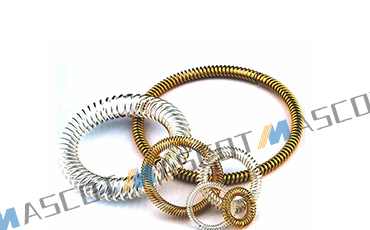
I. Unique Advantages and Applications of Helical Coil Springs
Traditional coil springs typically feature perpendicularly wound coils, primarily providing axial (along the centerline) elasticity. In contrast, helical coil springs are wound at an inclined angle, granting them three key advantages:
Multi-Directional Elasticity: Capable of withstanding not only axial pressure but also radial (lateral) forces, making them ideal for complex load environments.
Enhanced Fatigue Resistance: The angled coil design disperses stress concentration, significantly extending service life compared to conventional springs.
Compact and Efficient: Delivers greater elastic deformation within the same space, solving installation space limitations.
In the automotive industry, helical coil springs are widely used in suspension systems and clutch damping mechanisms, effectively absorbing multi-directional vibrations to improve ride smoothness. In medical equipment, they ensure precision and noiseless operation in surgical robot joints and imaging devices. For industrial automation, these springs provide reliable lateral impact resistance for robotic arm joints and precision clamps, acting as "flexible guardians" for core components. This versatility makes helical coil springs indispensable in modern industrial machinery.
II. How to Choose a Reliable Helical Coil Spring?
The performance of helical coil springs depends on material, craftsmanship, and design precision. Substandard springs may cause abnormal noise, premature failure, or even safety hazards. Key selection criteria include:
Material: High-carbon steel (high strength), stainless steel (corrosion resistance), or special alloys (high-temperature resistance).
Craftsmanship: Consistency in coil angle directly affects force distribution uniformity.
Testing Standards: Fatigue testing, salt spray tests, and other reliability validations.
Small Springs, Big Expertise—In today’s pursuit of equipment reliability, the "multi-directional flexibility" of helical coil springs is becoming a crucial upgrade. If you’re seeking longer lifespan and higher cost-effectiveness, contact Mascot now for your customized spring solution!