
A rotary shaft lip type bidirectional seal is a sealing component installed between a rotating shaft and a housing. Its main function is to prevent internal media (such as lubricating oil, hydraulic oil, etc.) from leaking, while blocking external contaminants (such as dust, moisture, etc.) from entering the interior of the equipment. This protects the rotating shaft and related components from wear and damage, ensuring the normal operation of the equipment. Compared with unidirectional seals, bidirectional seals can achieve reliable sealing during both forward and reverse rotation of the shaft, making them applicable in a wider range of scenarios.
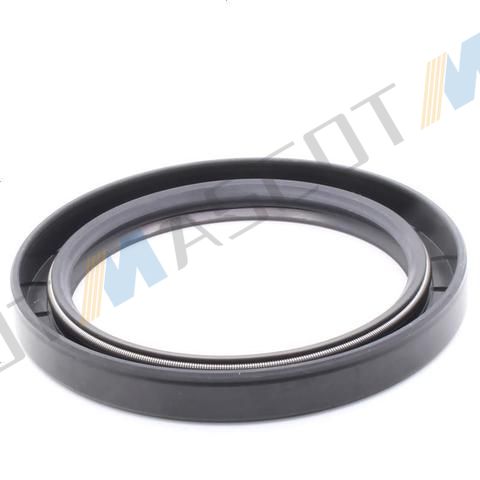

Structural Composition of Rotary Shaft Lip Type Bidirectional Seals
The structure of a rotary shaft lip type bidirectional seal is relatively complex, typically consisting of the following key components:
Lip: This is the core part of the seal responsible for its sealing function, directly contacting the surface of the rotating shaft. The shape and size of the lip are carefully designed, usually wedge-shaped or triangular. It can tightly fit the shaft surface under the action of medium pressure and spring force, forming an effective sealing interface.
Skeleton: The skeleton is usually made of metal materials (such as thin steel plates). Its role is to provide rigid support for the seal, ensuring that the seal maintains a stable shape during installation and operation, and preventing deformation due to pressure or temperature changes.
Spring: Some rotary shaft lip type bidirectional seals are equipped with a spring inside the lip. The elastic force of the spring can enhance the pressure of the lip against the shaft surface, especially under low pressure or fluctuating medium pressure conditions, to ensure sealing reliability.
Secondary Lip: Some bidirectional seals are also provided with a secondary lip, which is located on the outer side of the main lip. It mainly plays a role in auxiliary sealing and dust prevention, further blocking the entry of external contaminants and protecting the main lip from damage.
Working Principle of Rotary Shaft Lip Type Bidirectional Seals
The working principle of rotary shaft lip type bidirectional seals is based on the basic principle of contact sealing. When the equipment is in operation, the rotating shaft rotates at high speed, and the lip of the seal tightly fits the shaft surface under the combined action of its own elasticity, spring force, and internal medium pressure, forming a dynamic sealing interface.
During shaft rotation, a thin medium film is formed between the lip and the shaft surface. This film not only provides lubrication to reduce friction and wear between the lip and the shaft surface but also enhances the sealing effect. When the internal medium pressure increases, the medium pushes the lip to fit more tightly against the shaft surface, thereby improving sealing performance. When external pressure or contaminants are present, the structure of the lip and secondary lip can effectively block their entry into the equipment.
Thanks to its bidirectional sealing design, Mascot's rotary shaft lip type bidirectional seals ensure that the lip maintains good contact with the shaft surface regardless of whether the shaft is rotating forward or reverse, achieving reliable bidirectional sealing.
Rotary shaft lip type bidirectional seals play a crucial role in mechanical equipment. Understanding their basic definition, structural composition, and working principle is of great significance for ensuring the normal operation of equipment and extending its service life.
In practical applications, the seal should be reasonably selected according to specific working conditions to give full play to its sealing performance. If you are unsure about how to select the right type, you can consult the official website of Mascot Technology. They can provide you with suitable models and specifications of rotary shaft lip type bidirectional seals based on parameters such as the equipment's working environment, pressure, temperature, and rotational speed.