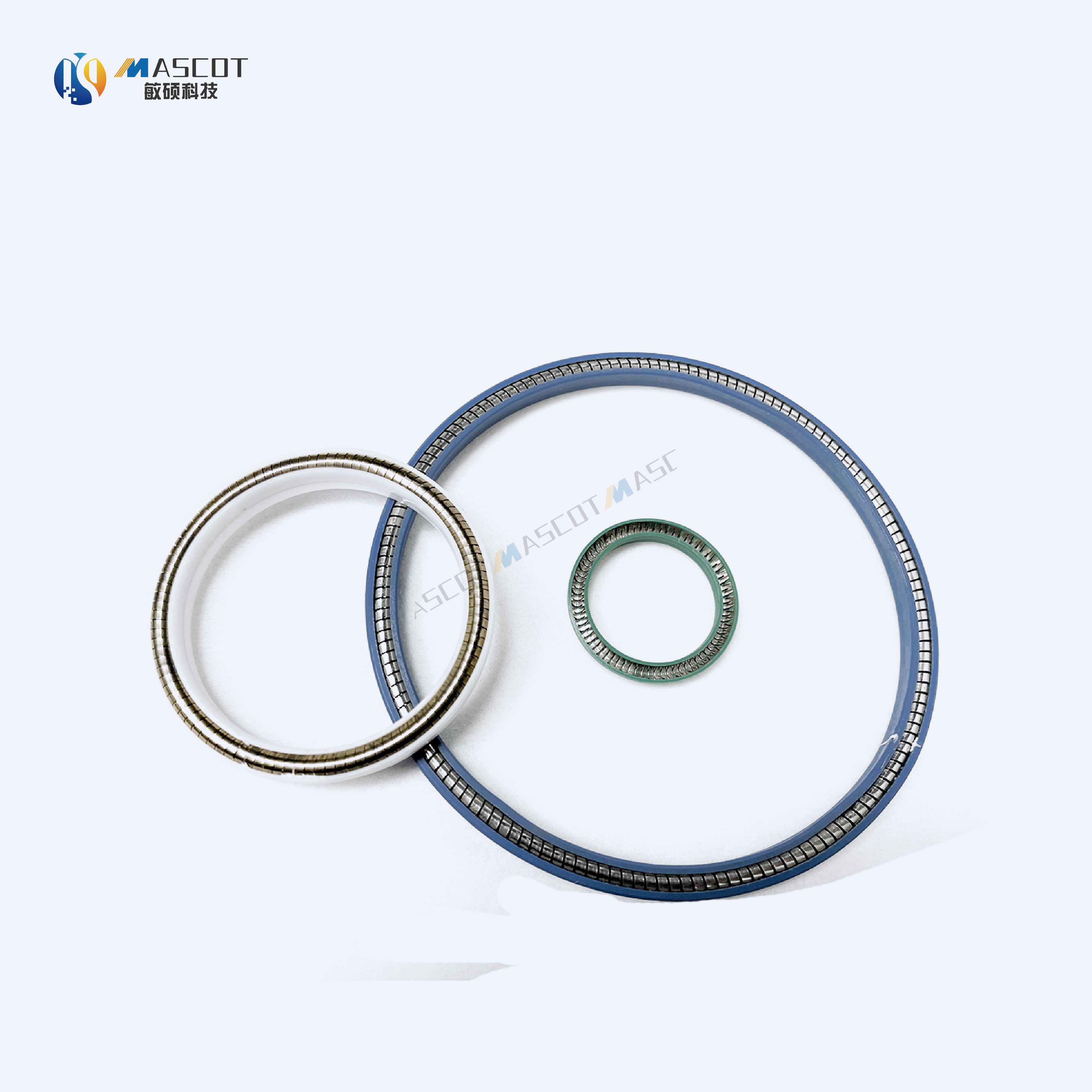
Say Goodbye to Sealing Pain Points! A Detailed Explanation of the Advantages and Characteristics of PTFE O-Rings
Hits:[Product news]
Do ordinary seals fail within weeks and leak frequently when exposed to strong acids and alkalis? Do rubber rings in high-temperature equipment harden and become brittle, or do seals in low-temperature pipelines shrink and leak? Do seals in moving parts cause high friction, leading to high energy consumption and frequent shutdowns? These pain points not only drive up maintenance costs but also hide safety and environmental risks. Fortunately, PTFE O-rings can precisely solve these problems.
1. PTFE O-Rings VS Rubber O-Rings
Polytetrafluoroethylene (PTFE), known as the "King of Plastics", is the basic material for manufacturing PTFE O-rings. PTFE O-rings are made of modified PTFE through precision processes. Compared with ordinary rubber O-rings, they have three significant advantages: First, they have extremely high chemical inertness and do not react with strong acids, strong alkalis, or organic solvents. Second, their friction coefficient is at the top level among plastics, with excellent self-lubricating performance. Third, their temperature resistance range is far beyond that of conventional materials, laying a solid foundation for dealing with extreme working conditions.
2. Four Core Characteristics
With its material properties and process optimization, PTFE O-rings have four characteristics that fully ensure sealing reliability.
Superior Corrosion Resistance: Tackles chemical erosion challenges. PTFE can resist highly corrosive media such as 98% concentrated sulfuric acid and potassium permanganate without aging or swelling. It is suitable for chemical reaction kettles and corrosive pipelines, significantly extending the maintenance cycle and drastically reducing leakage risks.
Wide Temperature Range Adaptability: Meets the challenges of extreme temperatures. Pure PTFE can work continuously at -60℃ to 260℃ and withstand high temperatures above 300℃ for a short time; the coated type can resist low temperatures down to -190℃, easily adapting to scenarios such as high-temperature drying and liquid nitrogen transportation.
Low Friction and Wear Resistance: Reduces wear in dynamic sealing. The dry friction coefficient is approximately 0.15, and it can be as low as 0.01-0.05 with lubrication, reducing equipment energy consumption and component wear. It is suitable for dynamic sealing in hydraulic cylinders and precision instruments.
High Pressure Resistance and Deformation Resistance: Adapts to high-pressure and complex working conditions. Combining the elasticity of rubber and the rigidity of PTFE, it can achieve a compression rate of 30% with minimal permanent deformation, withstand pressure of 0.5-50MPa, and has strong extrusion resistance. No additional retaining rings are required for high-pressure valves and pressure vessels.
Founded in 2005, Mascot has been adhering to the tenet of "Customer First, Quality First" for 20 years, providing customers with comprehensive sealing product solutions. The company's founder and core technical team all have senior management and technical backgrounds in the same industry in Europe and America, and have built a modern full-process management system covering R&D and design, precision manufacturing, and after-sales service. It has obtained international authoritative certifications such as IATF16949:2016, and has won a number of national utility model patents and invention patents, developing a variety of special sealing formulas. Relying on its outstanding product performance and service quality, it has become a strategic partner of many industry-leading enterprises, and continues to create value for customers with innovative technologies. We sincerely invite you to inquire: 400-008-3858!
Need customized products? MASCOT technology can customize your products according to the needs of all your projects. If you have any opinions and suggestions or are willing to cooperate with us to achieve a win-win situation, please contact us as soon as possible.