
In hydraulic and pneumatic industrial systems, guide rings are critical motion support components. Their core function is to ensure the precision and reliability of equipment operation, and scientific selection is fundamental to achieving their optimal performance.
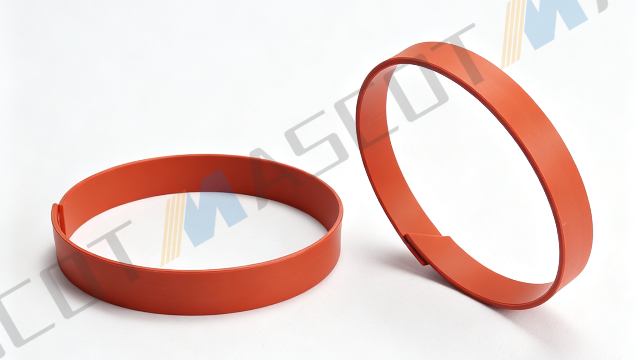
The key functions of guide rings are primarily reflected in three aspects. First, they provide precise guidance and positioning, effectively constraining the motion trajectory of pistons or piston rods to prevent deviation and sway, ensuring the coaxiality of linear motion. Second, they offer isolation protection and reduce friction by preventing direct contact between metal components, minimizing wear and protecting seals. Finally, they possess excellent load-bearing and buffering capabilities, enabling the distribution of lateral loads and the mitigation of shock vibrations, thereby enhancing system stability under high-pressure and high-speed operating conditions.
1. Matching Core Operating Parameters
System Pressure: Low-pressure systems can utilize cost-effective straight-cut polyoxymethylene guide rings; medium-pressure applications are better suited for oblique-cut polyurethane guide rings with higher load-bearing capacity; for high-pressure or impact load equipment, split-type fiber-reinforced resin or metal alloy guide rings should be selected.
Operating Temperature: High-temperature environments require guide rings made of heat-resistant materials such as PTFE or specialized metals; for standard temperature ranges, materials like polyoxymethylene offer a more cost-effective choice.
Medium and Environment: In environments with corrosive media (such as special hydraulic oils or chemicals), priority should be given to materials with excellent chemical corrosion resistance, such as PTFE, to ensure long-term stability.
2. Integrating Material and Structural Design
The combination of material and structure determines the performance ceiling of guide rings.
Material Selection: Polyurethane stands out for its overall wear resistance and compression resistance, making it suitable for high-speed, high-pressure reciprocating motion; PTFE, with its exceptional temperature resistance, corrosion resistance, and self-lubricating properties, is ideal for specialized environments and media; fiber-reinforced composite materials provide higher mechanical strength and dimensional stability, meeting the demands of heavy-load applications.
Structural Design: Straight-cut designs are easy to install and cost-effective; oblique-cut designs offer superior sealing and load-bearing performance; split-type designs are specifically engineered for extreme pressure and harsh operating conditions; designs with positioning features effectively prevent rotation or axial movement during operation.
In summary, selecting guide rings is a systematic engineering process that requires a comprehensive consideration of operating parameters, material characteristics, and structural design. Making the right choice can significantly enhance equipment operational efficiency and service life. For additional selection materials, please contact Mascot customer service for free catalogs and technical consulting services.