
In heat pump systems, the compressor, as a core component, often operates under high temperatures exceeding 100°C–150°C and high-pressure conditions. Combined with refrigerant corrosion, lubricating oil exposure, and alternating impact from frequent start-stop cycles, improper seal selection can easily lead to issues such as leakage, wear, and premature failure, which may result in reduced system efficiency and equipment downtime. To avoid such "failures," the key lies in focusing on three core aspects: material, design, and installation, ensuring that seals maintain stable and long-lasting performance under extreme conditions.
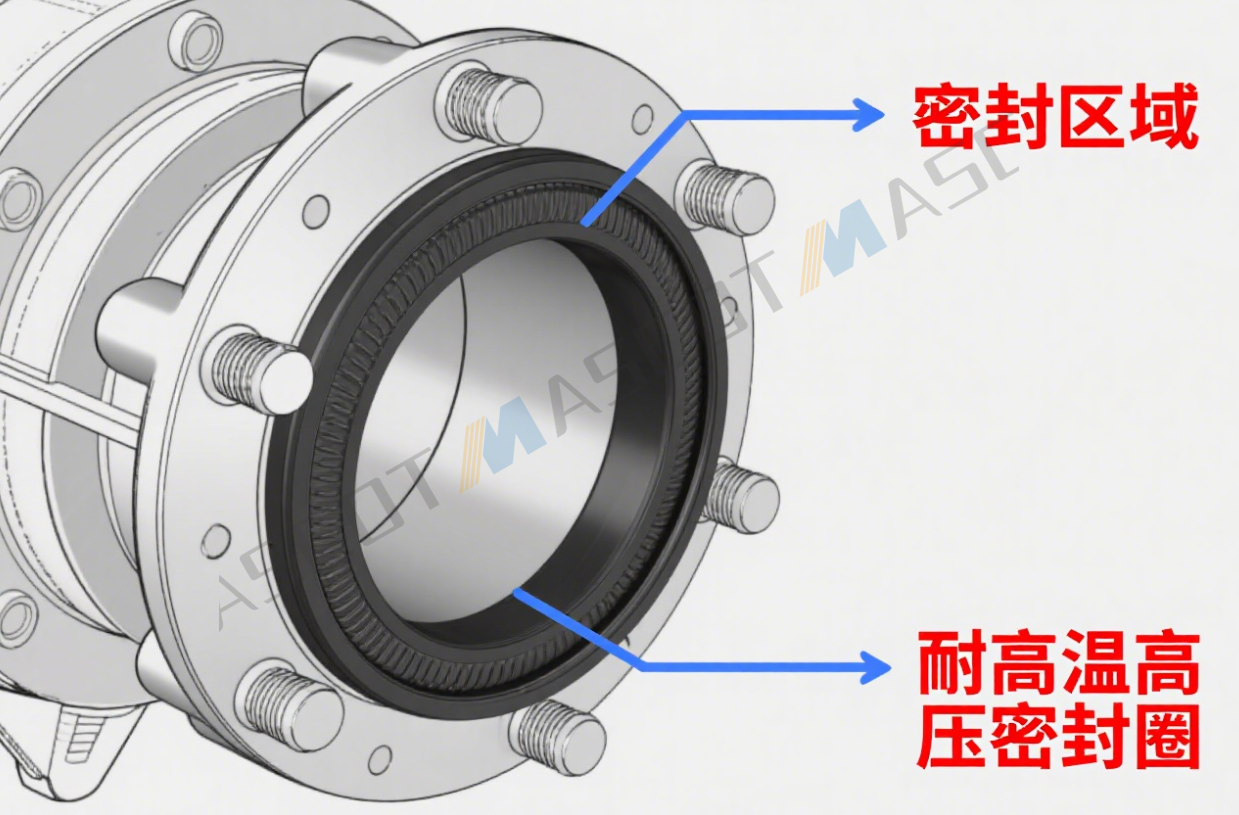
The demands placed on seals under high-temperature and high-pressure conditions are far more severe than in ordinary scenarios. On one hand, high temperatures accelerate seal material aging, causing ordinary rubber to either soften and flow or harden and crack. On the other hand, high pressure significantly increases stress on the sealing surfaces; if the design is unsuitable, extrusion gap and rollover deformation can easily occur. Adding to the complexity, prolonged contact with refrigerants such as R410A and CO₂, as well as with lubricating oils, can cause swelling or dissolution of seal materials, further shortening their service life. These combined factors make seal selection a critical step for the stable operation of heat pump systems.
Selecting the right material is foundational, directly impacting seal life. Under high-temperature and high-pressure conditions, materials with good resistance to refrigerants, high temperatures, and oils should be prioritized. The PTFE-filled series (e.g., spring-energized seals, Stepseals) is a stable solution, offering low friction and wear resistance. They help reduce extrusion risk under high pressure and are suitable for compressor shaft seals and high-pressure dynamic sealing. For elastomers, FKM offers good high-temperature and chemical stability, while HNBR provides good refrigerant resistance and tear strength. These are suitable for static sealing applications such as O-rings and gaskets. It is recommended to use ordinary NBR and silicone materials with caution, as these materials tend to age or fail quickly under high-temperature refrigerant environments.
Structural design is also an important safeguard to help cope with high-pressure conditions. For dynamic sealing, combined structures with backup rings can be used. For example, the PTFE U-cup design of spring-energized seals with a stainless steel spring allows for adaptive adjustment within a certain pressure range. The stepped design of Stepseals and Glyd Rings, combined with guide rings, helps reduce extrusion deformation under high pressure. Balanced design is recommended for shaft seals to reduce impact on the sealing surface from high pressure. For static seals, the compression ratio must be properly matched to avoid failure due to excessive compression.
Installation and fitting precision cannot be overlooked. Many "failure" cases stem not from the product itself but from improper assembly. Excessive surface roughness of the shaft or bore can accelerate seal wear, excessive clearance can easily cause extrusion, and reverse installation, scratching, or inadequate lubrication may directly lead to seal failure. During assembly, ensure the sealing surfaces are clean and burr-free, apply a compatible lubricating oil, avoid forceful impacts, and control coaxiality to reduce the risk of uneven wear.
Of course, theoretical selection is only one aspect; practical verification is equally important. If a project has a tight schedule, involves complex operating conditions, or lacks reliable test data, joint selection with an experienced seal manufacturer can often effectively reduce trial-and-error costs. For example, in critical positions such as compressor shaft seals and high-pressure dynamic seals, a manufacturer like Mascot Technology, which integrates R&D, production, and sales, can provide customized solutions and product samples (Hotline: 400-008-3858) to assist users in achieving more reliable sealing configurations under high-temperature and high-pressure conditions.